

UBIGENE은 유전자 편집 서비스와 고품질 제품을 제공하는 글로벌 생명과학 기업입니다.
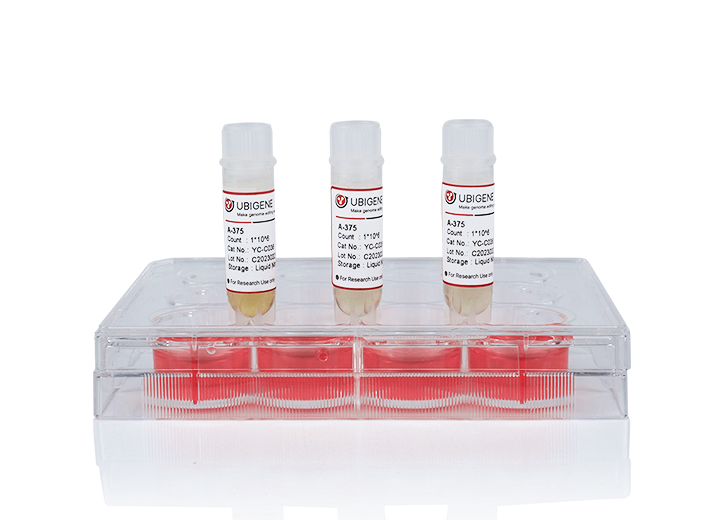
제품 설명
Human Acute Promyelocytic Leukemia Cell Line(NB4)
제품 번호
YC-C122
제품 설명
The A20 cell line is a BALB/c B cell lymphoma line derived from a spontaneous reticulum cell neoplasm found in an old BALB/cAnN mouse.


| Loci | STR Info (Sample Cell) Sample Cell Line: A20 | STR Info (Cell bank) Cell Line: A20 | |||||
| Allele1 | Allele2 | Allele3 | Allele4 | Allele1 | Allele2 | Allele3 | |
| 18-3 | 16 | 18 | 15 | 16 | 18 | ||
| 4-2 | 21.3 | 21.3 | |||||
| 6-7 | 11 | 12 | 11 | 12 | |||
| 19-2 | 14 | 14 | |||||
| 1-2 | 17 | 18 | 17 | 18 | |||
| 7-1 | 25.2 | 25.2 | |||||
| 8-1 | 12 | 13 | 12 | 13 | |||
| 1-1 | 15 | 16 | 15 | 16 | |||
| 3-2 | 13 | 14 | 13 | 14 | |||
| 2-1 | 15 | 15 | |||||
| 15-3 | 17.2 | 22.3 | 22.3 | ||||
| 6-4 | 18 | 18 | |||||
| 13-1 | 16.2 | 17.2 | 16.2 | 17.2 | |||
| 11-2 | 17 | 17 | |||||
| 17-2 | 16 | 17 | 16 | 17 | |||
| 12-1 | 16 | 16 | |||||
| 5-5 | 14 | 15 | 14 | 15 | |||
| X-1 | 25 | 25 | |||||
| TH01 | |||||||
| D5S818 | |||||||
For research use only. Not intended for human or animal clinical trials, therapeutic or diagnostic use

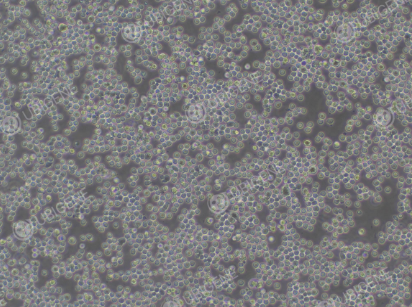
Cryopreserved cells: In the case of cryopreserved cells transported with dry ice, upon received, immediately transfer toliquidnitrogen for storage or store briefly at -80°C freezer, or proceed directly to cell thawing. Uponcell thawing, please count the cell number and cell viability and take some photos of the cells under different magnification (e.g. at 100x and 40x) as the records.


1) Preparation: warm up the complete culture medium in 37°C water bath for 30 mins. Transfer the cryopreserved vial from liquid nitrogen to - 80°C freezer, and leave for several minutes to volatilize residual liquid nitrogen; 2) Inside the ultra-clean bench, pipet 6-7 mL of complete medium into a 15 mL centrifuge tube; 3) Take out the cryopreserved vial from - 80℃ freezer and leave in dry ice temporarily, shake slightly before thawing to remove residual dry ice and liquid nitrogen. Then hold the cap with forceps, quickly thaw cells in a 37°C water bath by gently swirling the vial (Note: keep the cap out of the water). In about 1 minute, it would completely thaw; 4) Inside the ultra-clean bench, sterilize the outer surface of the vial by wiping with an alcohol cotton pellet and leave it to dry. Transfer the thawed cells to the prepared centrifuge tube (step 2) by pipette, close the lid, and centrifuge at 1100 rpm for 4 mins at room temp to collect the cells; 5) Inside the ultra-clean bench, carefully remove and discard the supernatant. Resuspend cell pellet with 1mL of fresh complete medium and then transfer to a T25 flask (or 6 cm culture dish) containing 4 mL of complete medium, label the flask with cell name, date and passage no., incubate the flask in a 37℃, 5%CO2 incubator.
Note: Please do not thaw the cells directly to a T75 flask or 10 cm culture dish.

The cells can be passaged when they have grown to the required density. The passaging of suspension cells can be divided into the following two cases: a. Half medium replacement: when cells in good condition, with less cell debris and no yellowing of the culture medium, use half medium replacement method for passaging; 1) Inside the ultra-clean bench, gently pipet the cells in the culture flask evenly and take 20 ul of cells for cell counting; 2) According to the cell counting results, aspirate and discard part of the cell suspension, adjust the cell density to 2x10⁵~4.0x10⁵cells/mL, and culture the cells in different sizes of culture flasks depending on the cell density. b. Total medium replacement: cells in good condition, with a lot cell debris and the medium has turned yellow, use total medium replacement method for passaging; 1) Transfer culture medium to a 15 mL or 50 mL centrifuge tube in an ultra-clean bench and centrifuge at 1100 rpm for 4 minutes; 2) After centrifugation, remove and discard the supernatant and resuspend the cells with 1 mL of complete medium by pipette, and take 20 ul of cells for cell counting; 3) According to the cell counting results, aspirate and discard part of the cell suspension, adjust the cell density to 2x10⁵~4.0x10⁵cells/mL, and culture the cells in different sizes of culture flasks depending on the cell density, incubate the flask in a 37℃, 5%CO2 incubator.

1) Same as procedures of cell passaging, transfer cells from culture flasks to 50 mL centrifuge tubes in an ultra-clean bench and centrifuge at 1100 rpm for 4 minutes at room temp; 2) After centrifugation, remove and discard the supernatant, and resuspend the cells with 1-2 mL of 4℃ pre-cooled cryopreservation medium (use the one you usually use in lab, or any commercial cryopreservation solutions are fine), mix well by pipetting and take 20 μL for cell counting, then add cryopreservation medium to adjust to the required density (5×10⁶-1x10⁷cells/mL); 3) Aliquot the cell suspension to cryovials as 1 mL/tube, close the lid tightly, and the cryovials should be labeled with the cell name, source, cell passage number, and date of cryopreservation in advance; 4) Place the cryovials in 4°C pre-cooled Freezing Container, then put the container in -80℃ freezers within 15 mins after cell cryopreservation; 5) Stay overnight, transfer the cryovials to liquid nitrogen for long-term storage.
PeptideAmphiphilesHitchhikeonEndogenous BiomoleculesforEnhancedCancerImagingandTherapy.
GPNMB disrupts SNARE complex assembly to maintain bacterial proliferation within macrophages.
Colorectal Cancer Cells–Derived Exosomal PIK3CA Mutation DNAPromotes Tumor Metastasis by Activating Fibroblast and Affecting Tumor Metastatic Microenvironment.
Energy Deficiency-Induced ATG4B Nuclear Translocation Inhibits PRMT1-Mediated DNA Repair and Promotes Leukemia Progression.
Targeting cancer glutamine dependency with a first-in-class inhibitor of the mitochondrial glutamine transporter SLC1A5_var.
USP29 and SMURF1 orchestrate FSP1-mediated ferroptosis suppression to facilitate chemoresistance in gastric cancer.
UBIGENE의 모든 제품을 만나 보세요!
Gene Editing Services
Products
UBIGENE - Official Distributor in South Korea "Morebio" 한국 공식 대리점 "모아바이오"


 MSDS
MSDS 온라인 견적


