Purity
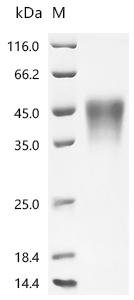
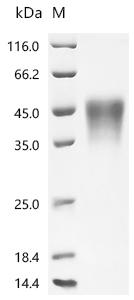
≥ 95% as determined by SDS-PAGE.
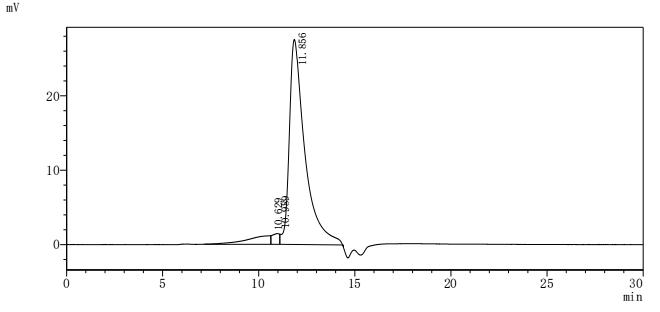
≥ 90% as determined by SEC-HPLC.
Endotoxin
Less than 1.0 EU/ug as determined by LAL method.
Activity
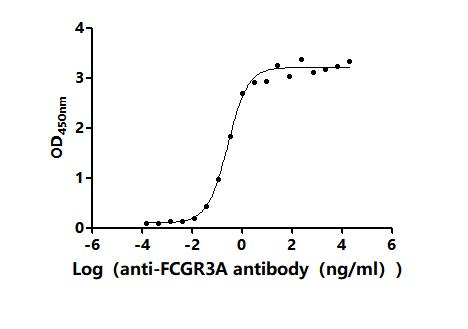
Measured by its binding ability in a functional ELISA. Immobilized Human FCGR3A at 2 μg/mL can bind Anti-FCGR3A recombinant antibody (CSB-RA008543MA1HU). The EC50 is 0.2330-0.3147 ng/mL.
Species
Homo sapiens (Human)
Expression Region
17-208aa
Target Protein Sequence
GMRTEDLPKAVVFLEPQWYRVLEKDSVTLKCQGAYSPEDNSTQWFHNESLISSQASSYFIDAATVDDSGEYRCQTNLSTLSDPVQLEVHIGWLLLQAPRWVFKEEDPIHLRCHSWKNTALHKVTYLQNGKGRKYFHHNSDFYIPKATLKDSGSYFCRGLFGSKNVSSETVNITITQGLAVSTISSFFPPGYQ
Tag Info
C-terminal 6xHis-tagged
Form
Lyophilized powder
Note: We will preferentially ship the format that we have in stock, however, if you have any special requirement for the format, please remark your requirement when placing the order, we will prepare according to your demand.
Buffer
Lyophilized from a 0.2 μm filtered PBS, 6% Trehalose, pH 7.4
Reconstitution
We recommend that this vial be briefly centrifuged prior to opening to bring the contents to the bottom. Please reconstitute protein in deionized sterile water to a concentration of 0.1-1.0 mg/mL.We recommend to add 5-50% of glycerol (final concentration) and aliquot for long-term storage at -20°C/-80°C. Our default final concentration of glycerol is 50%. Customers could use it as reference.
Storage Condition
Store at -20°C/-80°C upon receipt, aliquoting is necessary for mutiple use. Avoid repeated freeze-thaw cycles.
Shelf Life
The shelf life is related to many factors, storage state, buffer ingredients, storage temperature and the stability of the protein itself.
Generally, the shelf life of liquid form is 6 months at -20°C/-80°C. The shelf life of lyophilized form is 12 months at -20°C/-80°C.
Lead Time
3-7 business days
Notes
Repeated freezing and thawing is not recommended. Store working aliquots at 4°C for up to one week.
Datasheet & COA
Please contact us to get it.
Description
CD16a mediates antibody-dependent cellular cytotoxicity by bridging IgG-opsonized targets to natural killer cells and macrophages, making it a critical node in therapeutic antibody efficacy and immune surveillance studies. This mammalian-expressed construct spanning residues 17–208 captures the complete extracellular ligand-binding domain, preserving the native glycosylation and disulfide architecture required for physiologically relevant Fc interactions. Functional ELISA validation demonstrates specific antibody binding with an EC50 of 0.233–0.315 ng/mL, confirming conform...Read more




 MSDS
MSDS 온라인 견적


